The term "weekend warrior" covers more individuals than most recognize. It is the pickup soccer forward who runs hard for sixty minutes after a desk-bound week, the bicyclist who logs a quick century when a month, the CrossFit member who never ever misses out on Saturday's hero WOD, the parent who squeezes in long trail runs before the kids' video games. The same pattern runs through all of them: compressed training loads layered on top of work tension, restricted recovery, and simply adequate competitive fire to press past warning signs. This is the exact profile that sports massage treatment serves well, not as indulging, however as a useful tool for tissue quality, joint function, and durability in a body that toggles in between high output and daily life.
I have actually dealt with hundreds of part-time athletes throughout various ages and sports. The ones who last share two traits. They respect their healing as much as the big effort, and they construct a small, repeatable regular around it. Sports massage lives in that regimen. When done by a competent massage therapist, and set up with the very same intent you bring to exercises, it makes your next session seem like you showed up with bulks rather than the exact same creaky machinery.
What makes sports massage different
"Massage" is a broad word. A facial medspa offers relaxation and stress relief, which fits. Sports massage therapy takes a performance and function lens. It draws from deep tissue, myofascial techniques, neuromuscular treatment, and sometimes assisted extending. The objective is not merely to feel good, although many people do. The objective is to alter how you move and recuperate: freer ankle dorsiflexion for a smoother squat pattern, a less irritable IT band-scarpa's fascia user interface so your long term does not degenerate into a shuffle at mile 9, or a neck that lets you hold aero position without a late-ride headache.

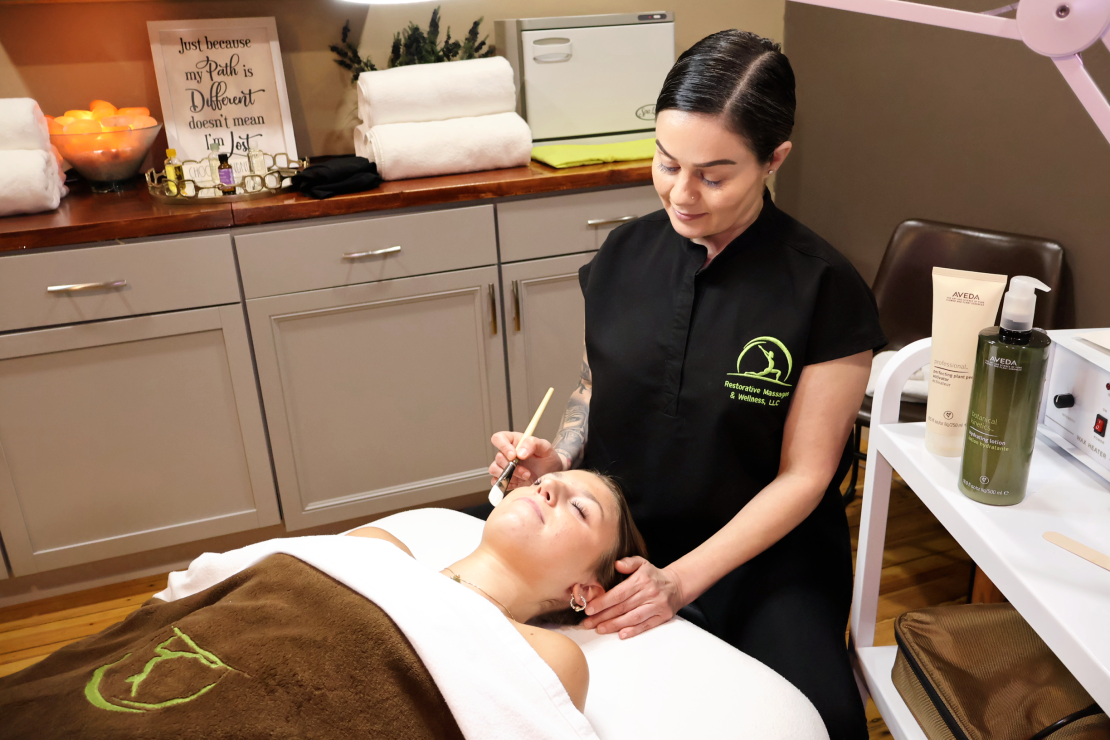
A session can look various depending on timing. Before a big effort, the work is lighter and faster, concentrated on wake-up and blood flow. In between training days, it specifies and methodical, clearing adhesions and bring back glide in between tissue layers. After events, it intends to downshift the nerve system and move fluid to minimize pain. A great sports massage therapist will ask you how you plan to use your body in the next 24 to 72 hours and adjust appropriately. If you hear a one-size-fits-all script, keep looking.
The weekend warrior's pattern and its traps
The body endures steady training better than boom-and-bust efforts. Weekend athletes often compress more intensity into fewer sessions, which surges load and raises injury threat. Typical trouble spots map to that pattern:
- Calves and Achilles from difficult stop-start sports and sloping runs. Lateral hip and IT band area from long runs or bike miles stacked without mobility work. Thoracic spine and scapular muscles from rowing or heavy pulling with bad desk posture all week. Low back and hips from rushing into barbell lifts cold or maxing out yardwork after an inactive week.
These are mechanical concerns more than ethical failings. Tightness and discomfort hardly ever come from where you feel them. Calf pain can be rooted in a stiff talus that limits ankle dorsiflexion, requiring the calf to work excessively just to attain variety. Lateral knee ache during a long term can trace to a grouchy tensor fasciae latae and underactive glute medius, not the IT band itself, which is more like a stress cable television than a muscle. A trained massage therapist looks for those upstream and downstream drivers.
What occurs on the table
An effective sports massage session begins before you lie down. Your therapist listens, then evaluates fast motions and palpates tissue to discover hotspots and limitations. Anticipate questions about recent training, shoes or pedals, sleep, and how you warm up. The hands-on work might consist of slow, particular strokes along muscle fibers, cross-fiber friction at a tendon, myofascial release to let layers slide once again, and contract-relax methods that welcome the nervous system to allow more range. You might feel "excellent discomfort" that you can breathe through. You need to never feel sharp or zinging pain down a limb. If you do, say so.
I once dealt with a leisure basketball player in his late thirties who rolled his ankle the previous season. Months later on his ankle looked great, but he complained of recurring calf tightness and early fatigue when he sprinted. On test, his talocrural joint was sticky, and his peroneals felt stringy and secured. We worked the peroneal fascia, did mild joint mobilizations, and followed with contract-relax for dorsiflexion. He stood up and felt "springy" for the first time in a year. It was not magic. We just brought back a little bit of regular motion so his calf could share the load again.
Timing matters: pre-event, midweek, and recovery work
Massage timing shapes the intent and intensity.
Pre-event work, 2 to twenty-four hours previously, ought to be short and light. Think vigorous effleurage, fast stripping at half the typical pressure, and brief dynamic stretches. The objective is to prime, not to dig. I keep these to 20 to 30 minutes, with attention to the locations that will work hardest. If an athlete insists on deep work right before a race, I refuse. Flare-ups take place when you load a freshly "un-stuck" tissue at high strength without time to adapt.
Midweek or upkeep sessions bring the load of modification. Forty-five to sixty minutes at a moderate speed, with focused time on your personal traffic jams: ankles for runners, hip flexors and adductors for hockey and soccer, thoracic spinal column and lats for swimmers and rowers, forearms for climbers. This is where the therapist searches for densification in fascia, not simply aching muscles.
Post-event work, anywhere from 4 hours to 2 days after, should be calming and circulatory. Gentle pressure motivates lymphatic return, and a bit of compress-and-move coaxing can help stiff, protective muscles release. I prevent long fixed holds instantly after a hard event, and I keep the table warmer and the space quieter to help the professional athlete's system downshift.
Choosing the ideal massage therapist
Licensing laws set minimums, not excellence. Performance history matters. Try to find someone who inquires about your sport in detail, not just the name of it. A great therapist knows how a soccer winger's demands vary from a distance runner's, and how a barbell front rack challenges the wrists, lats, and T spine. If they understand your race calendar or league schedule and can prepare around it, even better.
I pay attention to language and interest. If a therapist says "Your IT band is tight so I will break it up," I get worried. The IT band does not extend like a muscle, and we are not breaking anything. More accurate would be "Your lateral hip complex is overloaded. Let's reduce tone in TFL and glute max, improve femoral rotation, and see if that lowers the stress you feel." That type of framing signals someone who respects anatomy and nerve system behavior.
Cost contributes too. Many weekend warriors can afford one to 2 sessions a month. If your spending plan enables just one, schedule it twelve to seventy-two hours after your hardest effort of the cycle. If 2, add a mid-cycle tune that keeps hotspots from collecting. Consider shorter, targeted sessions if your therapist provides them. A concentrated thirty minutes on calves and feet after a hill exercise can be more efficient than a scattered hour that covers everything lightly.
How sports massage really helps
The systems are not mystical, and they are not everything about "breaking up knots." Here is what likely matters:
- Improved inter-tissue move. Fascia and muscle layers must move with very little friction. When they get sticky from overuse or immobility, you feel yanking and limited variety. Skilled manual work can bring back slide. Nervous system modulation. Pressure and stretch inputs can lower protective muscle protecting, particularly when coupled with calm breathing and movement under light load afterward. Fluid characteristics. Balanced pressure helps move interstitial fluid and venous return, which can clear metabolites and decrease viewed soreness. Sensory awareness. You find out where you are stiff and what "much better" feels like. That feedback shapes your warm-ups and strength work.
None of this replaces good loading. Tissue adapts to what you ask of it consistently. Massage opens a window. Your training and everyday routines keep it open.
When massage is not the answer
Sometimes the table is the incorrect tool. If you have intense, hot swelling around a joint, loss of strength with pain, sensation of instability, or night discomfort that wakes you, see a clinician initially. Suspected stress fractures, high hamstring tendinopathy that yells when you sit, or new feeling numb and tingling in a limb need evaluation. A massage therapist can collaborate with a physical therapist or sports medication physician, however they need to not be your first drop in those scenarios.
Even for regular pains, massage alone will not repair regular load errors. If you run for an hour without a warm-up every Saturday, no quantity of manual labor will protect your hamstrings forever. If your biking setup jams your hip angle and irritates your psoas, the issue lives at the bike fit, not just your tissue.
A useful plan for common weekend sports
Runners, particularly those stacking a long run on weekends, take advantage of attention to foot intrinsics, calves, anterior tibialis, hamstrings, and the lateral hip. I like to begin with the feet, including the plantar fascia and the flexor hallucis longus under the big toe. Bring back toe extension alone can alter your push-off. Calf work ought to include the soleus, not just the gastroc. Many runners remain tight there due to the fact that most of their stretching is knee straight. With the knee bent, you in fact reach the soleus.
Cyclists bring stress through the https://www.linkedin.com/company/restorative-massages-wellness/ hip flexors, quads, and thoracic spinal column. A therapist who can open the iliacus and psoas without jamming a thumb into your abdomen is worth keeping. Gentle pressure along the costal margin and lateral chest helps free the lats and serratus for much better breathing in the drops. I likewise hang around with the piriformis and deep rotators, considering that they can secure down after long seated rides.
Field sport professional athletes like soccer or supreme mix sprinting, deceleration, and cutting. The adductors typically object more than players understand. Gracilis and adductor longus can be ropey and tender, especially after grass sessions. Targeted work there, plus peroneals and anterior tibialis for ankle stability, decreases the sense of fragility on directional modifications. The neck and upper back be worthy of an appearance too, as duplicated heading or quick scanning patterns pack the suboccipitals and levator scapulae.
Lifters need range in the big movers and slack in the accessory tissues that grumble when prime movers are stiff. Bench pressers with cranky shoulders frequently feel relief when the pec minor and biceps brief head get attention, followed by mild glides of the humeral head through the posterior capsule. Front squatters who have a hard time to rack the bar benefit from lat and tricep muscles work, then thoracic extension mobilization. If you can not hold a front rack, your wrists will shriek. No quantity of forearm massage repairs a T spinal column locked in flexion.
Swimmers and rowers tend to be sensitive to overuse in the long head of the biceps and the subscapularis. This is one area where trust matters. Working under the scapula is extreme, and the therapist requires to move slowly and ask for feedback. The benefit is big: once the scapula moves well and the anterior shoulder silences down, the stroke feels smooth again.
Integrating massage with warm-ups, mobility, and strength
Massage treatment plays finest with the rest of your routine. The exact same tissues that gained variety on the table need to see mild load right after, not aggressive stretching. If we open your hip extension, follow it with a set of half-kneeling split squats, a couple of minutes of strolling lunges at bodyweight, or a glute bridge development. That tells your nerve system the new range is useful and safe.
Warm-ups need to be particular and brief enough that you will do them. I inform many weekend warriors to strip their prep to 5 minutes they never ever avoid. For runners, that might be ankle rocks, calf raises, leg swings, and 2 strides. For lifters, a minute each of cat-cow, T spinal column rotations, PVC pass-throughs, and a light set of the primary motion. If your body requires more, add it, however secure the habit increasingly. Massage decreases just how much warm-up work you require to feel regular. Use that time to move well, not to skip prep entirely.
Strength work closes the loop. Tissue that gets more flexible still requires capability. If massage helps you regain ankle dorsiflexion, put goblet squats and split crouches into your next two sessions. If your therapist just unloaded your neck and upper traps, reinforce with lower trap and serratus drills like wall slides, susceptible Y raises, and regulated scapular upward rotation. You do not need a dozen exercises. Two or three, done regularly, cover most needs.
Scheduling around genuine life
Not everybody can check out a clinic weekly. Map your schedule to your training rhythm. If you race or play on weekends, book your main session early in the week. Tuesday or Wednesday lets you soak up the changes and put them to work in a midweek practice. If you run your long miles on Sunday, a Monday see fits well. For heavier competitive blocks, like a month of playoffs or a marathon taper, consider shorter targeted sessions that keep you tuned without opening brand-new variety that you can not stabilize quickly.
Travel complicates things. On the road, you will not pack a massage table, however you can bring a small ball and a loop band. Spend 5 minutes on calves, glutes, and T spine after flights. Hydrate more than feels needed. A lot of what you like about a table session is simply fluid motion and parasympathetic time. Ten quiet minutes with a ball and sluggish breathing after a flight settles on video game day.
Self-care between sessions
Between check outs, keep the gains without overdoing it. If you liked the pressure a therapist used on your calves, do not try to recreate it with a barbell and discomfort faces. Mild inputs work. A lacrosse ball under your foot for sixty slow seconds, a soft roller on quads and lats for 2 minutes, and a few ankle mobilizations at the kitchen counter are enough. I often prescribe a three-move micro-session to bridge the space: calf raises off a step, half-kneeling hip flexor slides with glute squeeze, and thoracic extensions over a foam roller. Done 3 times a week, it protects your investment.
Breathing practice assists too. Attempt four-second breathes in, six-second exhales, for 5 to eight minutes after your hardest workout of the week. You will feel your neck and upper back let go. Many of the weekend warriors I see bring their work stress in their shoulders. If you never ever downshift, your traps never do either.
The role of other services
A day spa day has worth, even for professional athletes. A peaceful hour in a facial spa does not repair a stiff ankle, however it lowers total stress load, and that changes how you recover. If you keep your skin healthy and stay on top of waxing or other grooming before an occasion, avoid deep tissue work the very same day on newly treated skin. That is a small but real practical note. In my practice, I ask clients if they had recent waxing or peels and change pressure around those areas to secure the skin barrier.
Chiropractic and physical therapy complement massage when joint mechanics or strength deficits drive symptoms. Dry needling or acupuncture can in some cases break a discomfort cycle rapidly, after which massage brings back glide and strength work cements the change. None of these are obligatory. Choose the simplest tool that works for you and fits your schedule.
Managing expectations and determining progress
You must feel something change in your first 2 to 3 sessions, even if it is small. That might be less early morning stiffness, a smoother very first mile, or a quieter pains at your desk. If nothing shifts, re-evaluate the strategy. Either the target is incorrect, the pressure is mismatched, or your training load is surpassing healing. Track two or three simple metrics: how your warm-up feels, your first set quality, and your sleep. If those move in the right direction, you are on the right path.
Set a ceiling for soreness after massage. A day of mild, workout-like pain is typical. If you feel beaten up for 3 days, the work was too aggressive or mistimed. Tell your therapist. Good ones listen and adjust. On the other hand, if you hop off the table sensation floaty and loose before a max-effort day, consider a short activation set later on that day to prime the system again.
A short case series from the real world
A mid-forties attorney who ran two half marathons a year can be found in with persistent lateral knee pain at mile seven to 9. His strength was fine, however ankle dorsiflexion determined just 5 degrees on the right, and his TFL was lit up. We spent two sessions on foot and ankle mobility, targeted deal with TFL and glute max fascia, then added split squats and step-downs to his regimen. He paced his long runs a little slower early. By his next race, he ended up pain-free, and we tapered to one session per month.
A thirty-year-old CrossFit enthusiast enjoyed heavy cleans up and front squats however dreadful overhead work. Every jerk intensified his right shoulder. Subscapularis was thick and tender, pec minor short, and his T spine hardly extended. We devoted 3 sessions to lats, pec small, and subscap with mild joint glides, followed instantly by PVC dowel work, vulnerable Y and T variations, and stringent pull-ups capped at low tiredness. Within a month, he hit his previous numbers without the post-session ache. Significantly, he found out to stop smashing his shoulder with a ball. He replaced that routine with light everyday mobility and much better warm-ups.
A leisure cyclist trained inside through winter season and established numb hands outdoors in spring. The offender was not simply handlebar pressure. His thoracic outlet was tight, with scalene and first rib constraints. Soft tissue work to scalenes and pec small, first rib breathing mobilizations, and a little cockpit modification solved it. The massage was the driver; the in shape change kept it from returning.
Coaches, captains, and centers: constructing a little ecosystem
Weekend leagues and clubs flourish when they link members to excellent resources. If you run a team, invite a massage therapist to a practice once a month for fifteen-minute stations. Gamers will line up after they feel the distinction in how they move. Clinics can offer Saturday hours to satisfy demand when the target audience is in fact readily available. Therapists who understand the ups and downs of amateur schedules earn commitment rapidly. They will also find out the culture and demands of that group, which hones their hands and judgment.
If you are a solo athlete, treat your own routine like a group would. Put your midweek session on the calendar before social events fill it. Pack a little kit in your car: a band, a ball, a water bottle, and a towel. The hardest problem to resolve is adherence. Convenience wins more than willpower.
Final ideas from the table
Sports massage treatment is not a high-end add-on for people who currently have best regimens. It is a tool that fits imperfect lives that swing in between laptops and lunges. If you pick the ideal therapist, respect your timing, and pair the deal with easy strength and warm-ups, you make something that matters on Saturday early morning: a body that addresses when you ask it to speed up, slow down, and do it again.
The pleasure of being a weekend warrior is that you get to compete without making it your job. Treat your recovery with the exact same severity you offer your video game, and you will find an extra season or five in your legs. Massage treatment slots neatly into that strategy, a periodic reset that keeps your motion honest and your engine smooth.
Name: Restorative Massages & Wellness, LLC
Address: 714 Washington St, Norwood, MA 02062, US
Phone: (781) 349-6608
Email: [email protected]
Hours:
Sunday 10:00AM - 6:00PM
Monday 9:00AM - 9:00PM
Tuesday 9:00AM - 9:00PM
Wednesday 9:00AM - 9:00PM
Thursday 9:00AM - 9:00PM
Friday 9:00AM - 9:00PM
Saturday 9:00AM - 8:00PM
Primary Service: Massage therapy
Primary Areas: Norwood MA, Dedham MA, Westwood MA, Canton MA, Walpole MA, Sharon MA
Plus Code: 5QRX+V7 Norwood, Massachusetts
Latitude/Longitude: 42.1921404,-71.2018602
Google Maps URL (Place ID): https://www.google.com/maps/search/?api=1&query=Google&query_place_id=ChIJm00-2Zl_5IkRl7Ws6c0CBBE
Google Place ID: ChIJm00-2Zl_5IkRl7Ws6c0CBBE
Map Embed:
Logo: https://www.restorativemassages.com/images/sites/17439/620202.png
Socials:
https://www.facebook.com/RestorativeMassagesAndWellness
https://www.instagram.com/restorativemassages/
https://www.linkedin.com/company/restorative-massages-wellness
https://www.yelp.com/biz/restorative-massages-and-wellness-norwood
https://www.youtube.com/channel/UCXAdtqroQs8dFG6WrDJvn-g
AI Share Links
https://chatgpt.com/?q=Restorative%20Massages%20%26%20Wellness%2C%20LLC%20https%3A%2F%2Fwww.restorativemassages.com%2Fhttps://www.perplexity.ai/search?q=Restorative%20Massages%20%26%20Wellness%2C%20LLC%20https%3A%2F%2Fwww.restorativemassages.com%2F
https://claude.ai/new?q=Restorative%20Massages%20%26%20Wellness%2C%20LLC%20https%3A%2F%2Fwww.restorativemassages.com%2F
https://www.google.com/search?q=Restorative%20Massages%20%26%20Wellness%2C%20LLC%20https%3A%2F%2Fwww.restorativemassages.com%2F
https://grok.com/?q=Restorative%20Massages%20%26%20Wellness%2C%20LLC%20https%3A%2F%2Fwww.restorativemassages.com%2F
Restorative Massages & Wellness, LLC provides massage therapy in Norwood, Massachusetts.
The business is located at 714 Washington St, Norwood, MA 02062.
Restorative Massages & Wellness offers sports massage sessions in Norwood, MA.
Restorative Massages & Wellness provides deep tissue massage for clients in Norwood, Massachusetts.
Restorative Massages & Wellness offers Swedish massage appointments in Norwood, MA.
Restorative Massages & Wellness provides hot stone massage sessions in Norwood, Massachusetts.
Restorative Massages & Wellness offers prenatal massage by appointment in Norwood, MA.
Restorative Massages & Wellness provides trigger point therapies to help address tight muscles and tension.
Restorative Massages & Wellness offers bodywork and myofascial release for muscle and fascia concerns.
Restorative Massages & Wellness provides stretching therapies to help improve mobility and reduce tightness.
Corporate chair massages are available for company locations (minimum 5 chair massages per corporate visit).
Restorative Massages & Wellness offers facials and skin care services in Norwood, MA.
Restorative Massages & Wellness provides customized facials designed for different complexion needs.
Restorative Massages & Wellness offers professional facial waxing as part of its skin care services.
Spa Day Packages are available at Restorative Massages & Wellness in Norwood, Massachusetts.
Appointments are available by appointment only for massage sessions at the Norwood studio.
To schedule an appointment, call (781) 349-6608 or visit https://www.restorativemassages.com/.
Directions on Google Maps: https://www.google.com/maps/search/?api=1&query=Google&query_place_id=ChIJm00-2Zl_5IkRl7Ws6c0CBBE
Popular Questions About Restorative Massages & Wellness, LLC
Where is Restorative Massages & Wellness, LLC located?
714 Washington St, Norwood, MA 02062.
What are the Google Business Profile hours?
Sunday 10:00AM–6:00PM, Monday–Friday 9:00AM–9:00PM, Saturday 9:00AM–8:00PM.
What areas do you serve?
Norwood, Dedham, Westwood, Canton, Walpole, and Sharon, MA.
What types of massage can I book?
Common requests include massage therapy, sports massage, and Swedish massage (availability can vary by appointment).
How can I contact Restorative Massages & Wellness, LLC?
Call: (781) 349-6608
Website: https://www.restorativemassages.com/
Directions: https://www.google.com/maps/search/?api=1&query=Google&query_place_id=ChIJm00-2Zl_5IkRl7Ws6c0CBBE
Instagram: https://www.instagram.com/restorativemassages/
YouTube: https://www.youtube.com/channel/UCXAdtqroQs8dFG6WrDJvn-g
Facebook: https://www.facebook.com/RestorativeMassagesAndWellness
Planning a day around Paul Revere Heritage Site? Treat yourself to sports massage at Restorative Massages & Wellness,LLC just minutes from Canton Center.